Celebrating diversity and making lemonade...

Celebrating diversity and making lemonade...

Sunday, August 7, 2022

Forever Flowers!


 In the Flower Garden

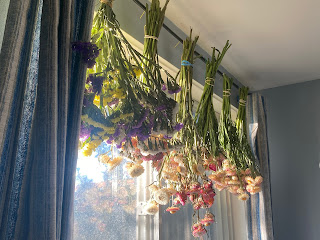
I know it has been a few weeks since I put out a blog post but things have been VERY busy!  Lots of planting and re-planting this past spring.  The weather was so wet and cool, it seems that it was hard for plants to get growing.  Decided to try and plant some everlasting flowers this year for something different.  They keep their color even when they are dried.  I picked 10 different flowers.  I only got 5 of them to grow.  That was a little disappointing at first but I have been so busy that I have not had much time to despair.  Here are a couple pics of some flowers that I have picked and are drying...


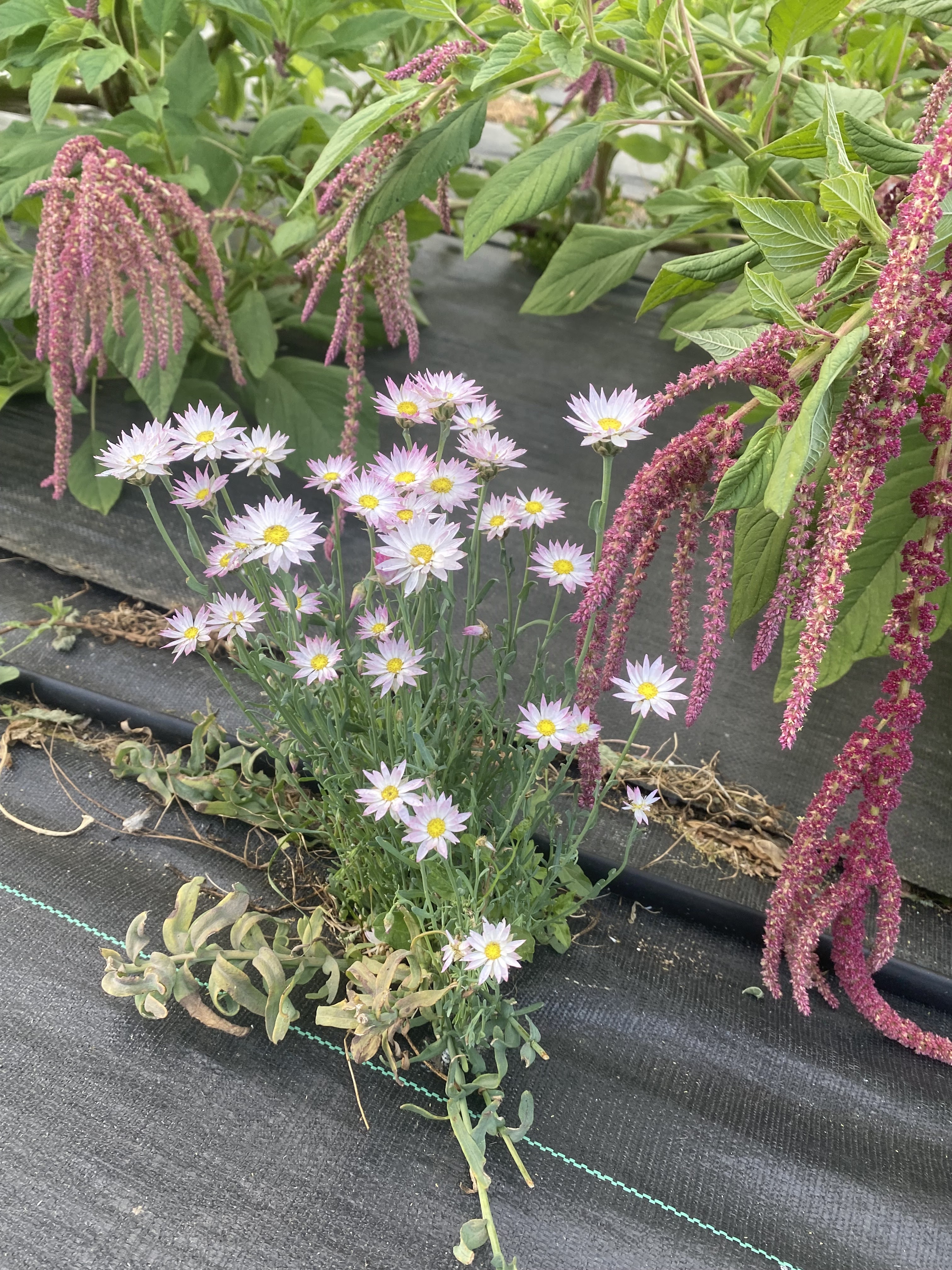
Now, let me back up and go through the flowers that grew!  Let me start with the Love Lies Bleeding which is a type of Amaranthus.  This is a type of pigweed.  I did my Masters thesis on identification of 10 different pigweeds so this one had a special place in my heart!  It was by far the largest plant.  It is in the background of this pic and it grew as tall as me.  
It produces these long, reddish flowing flower heads and they are so beautiful!  I took a bunch to the Farmers Market last time I went and someone walked by and offered to buy them.  Sold!
This flower is called Globe amaranth but it is not an Amaranthus species (at least I don't think so).  It's scientific name is Gomphrena.  There are little flowers and they have a really neat flower with lots of detail.  It reminds me of a round seashell pattern.  There are white and purple ones...


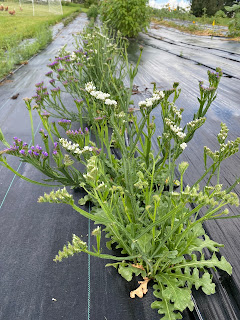
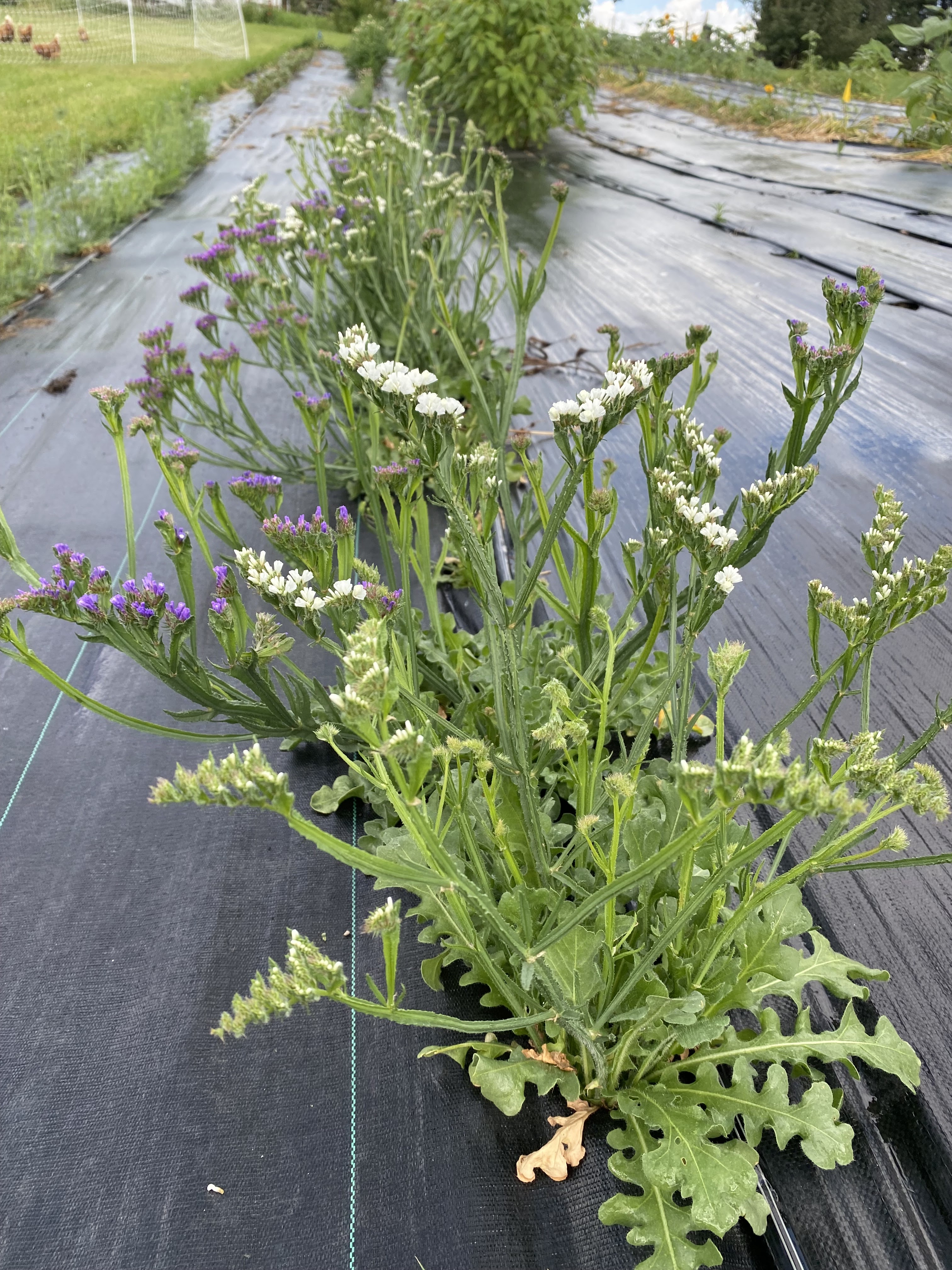
This flower is called Statice and I am REALLY liking it.  It has a unique growing pattern with a whorl at the bottom and then sends up the flower stalks.  They look like they belong in the desert or another planet...
I feel that a bouquet of them is pretty all by itself!  Ignore my dirty sleeve...LOL!
This is a type of Nigella and it is called Love in the Mist. The flowers are pretty but I don’t care for the way they dry down...
...BUT they do make some interesting seed pods though!
Here is a type of strawflower. It has single flower heads. The plants are pretty small and only about a foot tall. They dry nicely but are just so small I am not sure if they will work well in a larger bouquet but I am going to try and make some smaller ones. 

This is another type of strawflower and it has double flowers and is much larger than the first kind mentioned before this. I like it a lot better and I think it will look nice when dried!

Several of the flowers I planted did not grow. Among those were yarrow, baby’s breath, Flamingo flower, globe thistle and foxtail millet. The foxtail millet did not even germinate so I must have gotten some bad seed.  I was most disappointed that the yarrow didn’t grow because I really like yarrow and was hoping for some pink yarrow plants. 

Of course, the birds, butterflies and bees LOVE all the flowers!


The sunflowers are finally starting to grow too!

I am going to start attempting to put these bouquets together this week.  Wish me luck!  Hopefully, will be back with a garden post in a couple weeks...

Have an eggcellent day!
~Denise


Sunday, June 19, 2022

Flavored vinegars and ACV drink recipes

 In the Kitchen

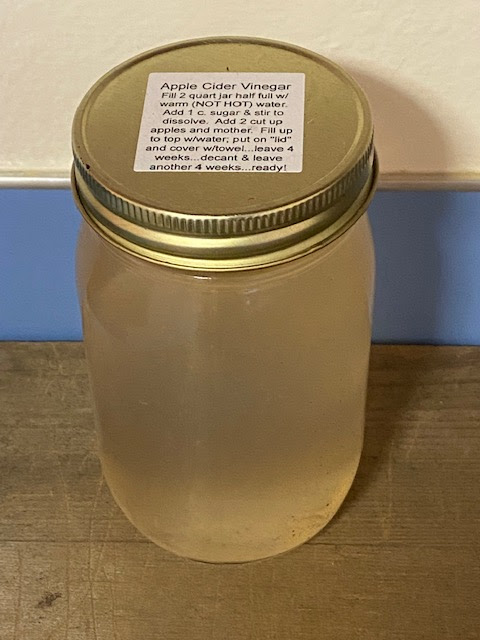
I posted about making apple cider vinegar (ACV) last November.  Then, at the end of winter, I made a post about foraging for pine needles and making pine needle vinegar.  This led me to looking into other types of flavored vinegars that could be made.  Wow!  What a rabbit hole!  You can make a flavored vinegar with just about anything!  It is actually quite simple.  You put the item that you want to flavor in a jar, fill it up with vinegar and then let it sit about 6 weeks to infuse.  You can speed up the process by heating the vinegar.  I don't want to heat the vinegar because I am going to be using the apple cider vinegar that I make from our apples.  This vinegar is "alive" because I ferment it myself and I want to keep this product raw so that there are probiotics in the ACV which is good for your gut health, microbiome and digestion!
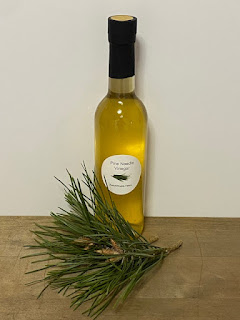
Let's take a step back and look again at apple cider vinegar.  Basically, it is acetic acid.  It is the result of fermenting yeast and bacteria with a food/drink item.  I use apples for the food item but there are lots of different vinegars.  Red wine, white wine, grapes (balsamic), and rice vinegars just to name a few.  Yeast turns the sugar in the food item into alcohol and then bacteria converts the alcohol to acetic acid.  Just to be clear, I am making ACV from our apple trees and then flavoring the ACV with plants we grow on the farm.  

ACV is all natural and can be used as a home remedy for many ailments.  But not everything you read on the internet is true about ACV.  What is the scientific evidence for the benefits of ACV?  These five proven benefits with sufficient scientific evidence are taken from the MedicineNet article 20 Benefits of drinking Apple Cider Vinegar:

1. Lower the blood glucose level: There is enough scientific evidence that ACV regulates the blood sugar level in diabetes; however, it shouldn’t replace the medications. Adding ACV as a part of an anti-diabetic diet may help to control the blood sugar level.

2. Weight loss: Researches have stated that ACV helps in weight management, lowering lipid levels, and prevents fat deposition around the organs.

3. Antibacterial: ACV has multiple antimicrobial properties on different microbial species, affecting its growth.

4. Boost skin health: ACV kills the bacteria and prevents the infection on the skin, thus helping in enhancing skin health.

5. ACV helps in detoxification of the body.
It is important to dilute ACV before consuming it.  Put 1-2 tablespoons of ACV in 1 cup of water.  ACV shouldn’t be directly applied to the skin as it can damage the skin.  I am drinking some of the pine needle vinegar in a glass of warm water this morning as I am finishing this blog post.  Make sure to use warm (not HOT) water or the hot water will kill the probiotics you are trying to consume.

Drinking straight ACV can be a little sour tasting. You can add a couple drops of sweetener to balance out the acidity. You can also add other ingredients to make a healthy drink.  Here is a great recipe for using ACV in a morning drink from NuVision

Apple Cider Vinegar Berry Lemonade

2 tbsp of berries (like strawberries) 
1 tbsp apple cider vinegar
1 tbsp lemon juice 
2 cups water

Place the berries in the bottom of your cup 

Add in your ACV, lemon juice, and sweetener if using. Fill the cup up with ice and add in enough water to fill the rest of the cup. Stir and enjoy! 

You can also add a few drops of raw honey or stevia if you prefer more sweetness in your drink. This drink is not only delicious, but the ingredients will also provide helpful benefits to start your day off right. Berries are low in calories, yet packed with vitamin C, antioxidants, fiber, and other powerful nutrients and vitamins. These components will replenish your electrolytes, give your immune system a boost and the fiber will help you feel full by delaying the movement of food through your digestive tract. Along with the berries, lemon juice is another great addition to this beverage. Lemon juice has been shown to ease bloating, improve digestion, and even promote detoxification, which makes it a great option for a detox drink. Lemon juice contains helpful vitamins and minerals like vitamin C, folate, and potassium. Consuming this drink first thing in the morning on an empty stomach will further promote these benefits. These ingredients make it a great apple cider vinegar recipe for weight loss, and overall health. 

Okay, let's get back to talking about flavored vinegars.  As I mentioned before, you can use almost anything to flavor vinegar...fruit, flowers, herbs, vegetables and a combination of these items!  I plan on experimenting with many different flavors this year.  I already started another batch of pine needle vinegar.  My chives are getting ready to flower and I am going to start some chive flower vinegar soon.  Also, I just made some rose petal jelly last week and I am thinking of making some rose petal vinegar now!  Here is a great website with some ideas for making 9 flavored vinegars.

How else can you use ACV?

* Use ACV as a substitute for plain vinegar in any cooking recipe

* Use ACV instead of lemon juice in homemade mayonnaise

* Homemade Broth – add a tablespoon of ACV to your bones to help get the minerals out

* Make salad dressing:
2/3 cup olive oil
1/4 cup cider vinegar
1 tablespoon honey
2 teaspoons Dijon mustard
1 garlic cloves, minced
1/4 teaspoon salt
1/8 teaspoon pepper
Combine all ingredients in a jar with a tight-fitting lid; shake well. Store in the refrigerator. Just before serving, shake dressing again.

* Water Bath Canner or Steamer Juicer – I add a tablespoon of ACV to the water in my canner/juicer to keep the minerals from building up inside

* Fruit Fly Traps – I just pour some in a small dish and keep it near my composting container on my counter. I also add a couple drops of dish soap to the dish.

* Vinegar is an acid and is great for cleaning because it kills microorganisms

Homemade Natural Cleaning Products
Make your own all-purpose cleaner with one part water and one part ACV. Use it to clean hard surfaces in the kitchen and bathroom, including countertops, hard water stains, and drains.

Daily Shower Cleaner
1.5 cups water
1 cup vinegar
1/2 cup rubbing alcohol
1 teaspoon liquid dish soap (I like this kind– affiliate link)
15 drops lemon essential oil (these are my favorite essential oils ever)
15 drops melaleuca (tea tree) essential oil
Mix all the ingredients together in a quart-sized spray bottle.
Shake well, and spray onto shower surfaces every day after use.
Remember–this is designed as a maintenance spray, so I would suggest starting with a clean shower first. It won’t remove built-on grime by itself, it’ll just slow down the process.

Homemade Hair Rinses
After shampooing, just mix equal parts apple cider vinegar and water, massage into your hair, and rinse off. It helps remove buildup, it also works as a natural detangler and general scalp revitalizer. Best not to use this hair rinse if you have color treated hair.

Foot Soak
Mix equal parts apple cider vinegar and warm water with a tablespoon of Epsom salt. Soak your feet in the bath for 20 minutes. After soaking, rinse off feet and coat your feet in a hydrating cream, put on a pair of socks, and let the lotion sit on them overnight.

Have an eggcellent week!
~Denise


Sunday, June 5, 2022

Spring 2022 update and phenology...Joshua graduating from high school this week!

 On the Farm

Just going to do a little update about what is happening on the farm...mostly planting!  We have had an unseasonably cold spring this year.  It has delayed planting of pretty much everything until the past couple of weeks.  I remember in past years planting in April and just crossing my fingers that everything would be okay but I didn't dare do that this year.  As soon as it looked like there were no freezing temps in the 10 day forecast, I started planting.  

Here is a pic of something new I am trying this year...Pink Celery!  Celery is actually pretty easy to grow and I have grown regular old green celery for several years.  I have canned my own cream of celery soup to use in casseroles the past couple years.  I saw the seed for this pink celery and decided to give it a try...so cute!
The geese are doing great!  Can you believe they are only 7 weeks old!  They only have a few baby feathers left on their necks.  They are learning how to go into their mobile coop at night and come out in the morning.  Golly the Gander is really good at going in at night now.  The first few nights I had to catch them and put them in but now they walk up the ramp themselves.
They love their pool but it is a little small for them.  I have a bigger pool to get out but just haven't found the time to drag it out of the barn.
The apple trees finally started blooming a couple weeks ago and the bees are out.  All 3 of our hives made it through the winter.  This is pretty amazing.  I really was just hoping at least 1 would make it.  Most of the time you can expect about half of your hives to not make it through the winter.
I moved the worms out to their summer home...the bathtub that we converted to a worm bin.  They will stay out here until the freezing weather returns.  I was pleasantly surprised at the amount of worms that I had in my bin in the house...
They will love it in the bathtub and will have lots of room to expand and grow.  I love the vermicompost that I can collect at the end of the season.
I have been working on expanding the flower farm.  I got the weed mat down and burned holes in it.  I did get some flowers planted but still have about half of it to go...

Phenology

I find phenology fascinating and I always think that I am going to follow this advice but then life happens and I just get so busy and want to get it all planted!  One aspect of phenology is looking to (mostly perennial) plants to give you cues as to when to plant your garden.  In a broader sense, phenology also encompasses bird migration, fall leaf color, insect emergence, etc...

Taken from almanac.com:
"Phenology is the study of cyclical natural phenomena and events—from bud burst to bird migration—and then letting nature’s timing help you understand when to plant and harvest. Native and ornamental plants act as nature’s “alarm clock” by signaling that temperatures and precipitation are optimal for planting.

Since average frost dates are just an estimate, observing the plant and animal activity can be very helpful. While not totally foolproof, following nature’s clock helps us tune in to the rhythm of life around us."

Here are some examples...sorry, not the best quality pic but I think you can read it if you make it larger...


When I asked Henry if he knew about phenology he said he did and gave me this example:  it is time to put out a preemergence herbicide for crabgrass when the forsythia bloom.  I had heard earlier this spring that it is time to hunt for morels after you have cut your grass 2 times.  

Do you use any phenology when you plant your garden?

Have an eggcellent day!
~Denise

Joshua is graduating from high school on Wednesday!  


Sunday, May 22, 2022

Edible Flowers and Jelly

 In the Kitchen

A lot of patrons of the Farmers Market  are intrigued by the Dandelion Jelly that I sell. They look at it and think that it is honey at first until they get closer and can read the label.  I first made Dandelion Jelly several years ago and it is the reason I decided to try and make the Red Sunflower Jelly. Making a flower jelly is not that hard and it can be made from any edible flower. 
First, you make a “tea” by putting flower petals into boiling water and letting it steep. Collecting the flower petals is one of the hardest parts. It takes a lot of petals!  We have some dandelions on our property but I like to go to my friends farm and gather them...they are HUGE and I am able to pick enough flower heads in about 3 minutes to make the jelly.  To get the petals, make sure and try not to get the green part of the flower head.  The green part is a little bitter. You can kind of grab the base of the flower head and twist to release the petals. I have also just used a scissors and cut off the petals. 
For the Dandelion Jelly, I use 2 cups of flower petals into 4 cups of boiling water.   I have also seen some recipes that call for 1 cup of water for each cup of dandelion flowers.
Let this steep for an hour. I usually just let it sit all day. I pick the flowers in the morning, make up the tea and then come back to it and make the jelly in the afternoon or evening…whenever I find time. Making the jelly is pretty similar to other jellies…add lemon juice and pectin, boil, add sugar and boil again. Put in your jars and process. 
All parts of the dandelion are edible. I have dug up the roots, dried them down, and ground  them to make a tea/coffee. I know the greens can be eaten in a salad or cooked but I have never done that.  I recently found a recipe for Dandelion Syrup and this sounds really intriguing to me.  Basically, you make the tea and add sugar and then boil it down to thicken it up.

Back to the flower jelly…you can make jelly from any edible flower. Here is a pic of some edible flowers but there are much, much more than what is listed here…

Here is a link to a comprehensive guide to edible flowers. It says what part of the flower is edible, how they taste (flavor) and best ways to prepare them.  

Dandelions are so much more than just a weed.  Here is some information from We Don't Deserve This Planet regarding dandelions:

Here are some interesting facts about the dandelion flower:
The dandelion is the only flower that represents the 3 celestial bodies of the sun, moon and stars. ☀️ 🌙 ⭐️. The yellow flower resembles the sun, the puff ball resembles the moon and the dispersing seeds resemble the stars.
The dandelion flower opens to greet the morning and closes in the evening to go to sleep. 😴
Every part of the dandelion is useful: root, leaves, flower. It can be used for food, medicine and dye for coloring.
Up until the 1800s people would pull grass out of their lawns to make room for dandelions and other useful “weeds” like chickweed, malva, and chamomile.
The name dandelion is taken from the French word “dent de lion” meaning lion’s tooth, referring to the coarsely-toothed leaves. 🦁
Dandelions have one of the longest flowering seasons of any plant.
Dandelion seeds are often transported away by a gust of wind and they travel like tiny parachutes. Seeds are often carried as many as 5 miles from their origin!
Animals such as birds, insects and butterflies consume nectar or seed of dandelion.🐦 🐛 🐜 🦋 🐝.
Dandelion flowers do not need to be pollinated to form seed.
Dandelion can be used in the production of wine and root beer. Root of dandelion can be used as a substitute for coffee. 🍷 🍺
Dandelions have sunk their roots deep into history. They were well known to ancient Egyptians, Greeks and Romans, and have been used in Chinese traditional medicine for over a thousand years.
Dandelion is used in folk medicine to treat infections and liver disorders. Tea made of dandelion act as diuretic.

I made Forsythia Jelly a couple of weeks ago and sold out.  The thing with flower jellies is that the flavor is very delicate.  I liked the Forsythia Jelly but I like the Dandelion Jelly more.  My next project is to make Lilac Jelly.  My lilacs are just starting to bud (everything is late this year because of our cool wet spring).

Do you enjoy eating flowers?

Have an eggcellent day!
~Denise

Sunday, May 8, 2022

The first blog post...

 On the Farm

This has happened kind of suddenly but I don’t feel like I have a lot more to say in my blog posts anymore!  I have been blogging our journey for just over 6 years now. There have been over 200 blog posts in that time. Also, I am just feeling a little stress from spring planting and expanding the cut flower business. This is just a crazy busy time of year so maybe that is why I cannot focus on what to blog about.  In fact, I didn't even really get around to taking a nice pic in honor of Mother's Day but I had this pick of the geese from this past week so I just decided to use that... 

Back to the blog posting...I thought it might be fun to take a look back at where we started on this journey 6 years ago. Here is my very first blog post:

Tuesday, March 3, 2015

The Dream

Mark and I want to have a small farm that is open to the public.  We will have pastured eggs in the spring (and hopefully, all year), you-pick berries in the summer, a pumpkin patch in the fall, and a Christmas tree farm in the winter.  I am wanting to document our journey.  We are collecting lots of information right now...hopefully, will be looking for land and a home next year (2016).
~Denise
That is it!  The whole post.  I guess you have to start somewhere.  Of course, this was before we even had a mailing list that I would share this through. The blog was mostly for my own reference to document our journey and help me remember back to where we began.  Let’s look at this first blog post and see how things have changed. 

First, we are not really aiming for a farm that is open to the public anymore. There are a lot of liability (insurance) issues with this. I am happy to give a family a private tour but it is just not feasible to have lots of people coming and going all the time. 

Pastured eggs…yes!
You pick berries…no
Pumpkin patch…no 
Christmas trees…no

I still continue to learn new things and this has changed the direction of our farm dream.  Keep in mind that this blog post was written before we even moved to our farm property. We moved to the farm in June 2017.  Since we bought a smaller property (4 acres), we don't have the room for a Christmas tree farm and pumpkins require quite a bit of space too.  We have adapted to the farm space that we bought.

Okay…what does the future of ReMARKable Farms look like?  Of course, Mark will still have his egg business. 

Here are things that I (Denise) continue to work on:
Meat chickens - each summer for our family and a select group of people that help with harvest day
Cut flowers - started with sunflowers and now expanding to everlasting flowers
Preserves - jams and jellies that I make from items that we grow on the farm or forage for in the community/mountains 
Apple Cider Vinegar - newest venture to utilize the apple from the 50 apple trees on the property. I will be experimenting with different flavored vinegars. Made the pine needle vinegar and have sold out so I am feeling hopeful about this new product!  Obviously, I could not foresee that we would be moving to a farm with old apple trees so this was not part of the original "dream".  

I think that all this is going to be enough to keep me busy!

Yesterday was the first Farmers Market of the season! I always sell some type of flavored lemonade at the Market. This week, the featured lemonade was Rhubarb Lemonade.  I gave a statement to the newspaper and you can read it here:

Of course, we just got the geese and they are so fun and have grown so fast!!!  They really like to “talk” with you! We have plans for other poultry in the future...maybe turkeys and guineas...

I think I may try to do just little update blogs every couple of weeks to let you know what we have going on. When I have something to write about, I will do a more “involved” post about that…we will see how this goes…I know this post has been all over the place but I just keep thinking about getting out on the farm and getting some stuff done today!

Have an eggcellent day!
~Denise


Sunday, April 24, 2022

Why geese?

 On the Farm

After learning that geese can grow to full size on grass only, I was fascinated and knew that we just had to get some.  Talk about a pasture raised animal!  We have about 4 acres of grass and geese seem like they might be good little lawn mowers!  Geese are herbivores which means that they only eat plants.  They don't really care to eat insects like chickens and ducks.  They even have little teeth on their tongues to help them bite off blades of grass.  Let me back up and explain our journey to get goslings...as with most everything else, it has taken a few years...
Before we even moved to the farm, I did some research about using geese for guard animals.  I had followed a farm on YouTube and they had a goose with their chickens.  The idea is that when a predator approaches the chicken yard, the goose would squawk loudly and scare them away.  To do this, it is best that the goose is raised with the chickens so it accepts the group of chickens as its own flock to defend.  If you have 2 geese with the chickens, they will just stick together and not really develop the guarding instinct.  I didn't think this idea would work for us because geese can live for many years and we would be rotating out the older laying hens on a regular basis.  I was unsure of how it would work to put a goose with a new group of chickens, especially young chickens.  Also, I found out that you can really only purchase goslings in the spring and we were getting our chicks in the fall so they would not have the opportunity to grow up together.  We decided to go with the guard dogs for guarding the chickens, ducks and farm!
In December 2019, I started to research about geese.  I knew that I wanted some but I didn't know what breed might be a good fit for our farm.  Some geese are louder and more aggressive than others and different breeds lay differing amounts of eggs.  Here is a link to a great chart that compares the different breeds.  I did a lot of reading and, after weeks, finally decided to get some American Buff geese.  Now, this gets a little confusing because Buff is actually a color of feathers and the breed is called American.  For some reason, on a lot of websites and books, they are often just referred to as "Buff."  I started looking for a goose breeder.  One of the books I was reading was called The Book of Geese A Complete Guide to Raising the Home Flock by Dave Holderread.  It just so happens that Holderread Farm is in Oregon.  I looked onto their website and found that they had American geese in Blue and Lavender colors!  These are more rare colors and I thought they would be so interesting to get some of those.  

I contacted them and they only sell adult birds.  See, geese only lay up to about 20-40 eggs each year in the spring.  The Holderread Farm sells show quality geese.  They raise up the geese through the summer and then sell the lower quality geese as "utility" geese and the show quality geese for a much higher price.  They actually ship full size geese through the mail but it can cost up to $300 for the shipping for one goose!  I looked it up and the Holderread Farm is about 7 hours from our house.  I decided that we would drive there one day, spend the night, then get the geese in the morning and drive the 7 hours back home.  I asked if they had any geese available and they were already sold out for 2020.  I waited and then inquired again in fall 2020 and got on the list for some geese the next year (fall 2021)!

We waited and waited.  In October 2021, I finally contacted them and they said that they would be going through the geese in early November to separate the utility and show quality geese.  Finally a few weeks after that, I got an email.  It said that they did not have any utility grade Blue or Lavender American geese but they had some show quality geese available for sale.  I wanted a male (gander) and 2 females (goose).  The price for the utility geese was $75 each.  The show quality geese were $250 each.  I was like...no thank you...I wasn't going to spend hundreds of dollars on an animal that I have never raised before.  It almost felt like a bait and switch situation.  I am sure it was not but it was so disappointing to wait for months and months and then not get the geese.  Back to the internet for goose breeders...

Since it was fall, 2021 at this point, I was just in time to place an order for spring goslings.  If you want goslings, you pretty much HAVE to order them in the fall for a spring delivery.  Almost all hatcheries will sell out over the winter.  Since I was going to have to put in an order for geese with a hatchery, I decided to take another look at different breeds and switched to the Pilgrim breed.  This is an auto sexing breed.  See, geese are not like chickens where the rooster is bigger and showier than the hen.  OR the ducks where the drake has a different quack and a curly tail.  Male and female geese look identical.  There are only 2 breeds that are auto sexed which which means that you can sex the goslings when they hatch.  Pilgrim geese are one breed that autosexes.  The male goslings are light yellow colored and the females are gray.  As they grow, the males develop white feathers and the females stay gray colored.  They are good for meat and may lay up to 40 eggs a year.  They are a medium sized breed and fairly docile.  Don't worry, if you come to the farm, they will be kept in a fenced area and not allowed to roam all over the farm and attack people!  Here is a pic of a male Pilgrim goose and a female Pilgrim goose...super easy to see the difference!

Why geese?

As I mentioned earlier, when I found out that geese can eat grass and grow to produce a large amount of meat, I just found it very intriguing.  To be fair, I have never eaten goose.  Maybe we won't even like it.  Also, I hear that it is challenging to pluck the feathers clean on the carcass on waterfowl because of all the down feathers.  It is recommended to not let geese raise goslings the first year they lay eggs.  So, we won't even have any of our own goslings for 2 more years.  If you think about it, geese seem like an amazing animal for the homestead.  They lay eggs in the spring and then graze on grass all summer and fall and then you can harvest them in early winter before it gets super cold and you have a Christmas goose!  Easy peasy!  We would like to get some turkeys at some point.  The downside of the turkeys is that they have to mostly eat grain and it gets very expensive to feed them but they will probably be easier to clean.  We plan on feeding the geese grain also, but we really want to be able to move them around the farm and take advantage of their lawn mowing capabilities.  Also, geese can live up to 20 years and turkeys live about 10 years.  

I think most people probably know that geese are pretty territorial and can honk and make a lot of noise when strangers come onto the property.  This makes them great guard animals for the farm.  Now, a goose is no match for a coyote and I heard on a podcast about a lady that watched as an eagle carried one of her geese off (so sad) but they are quite noisy and make keep small predators away.  They are mostly aggressive in the spring when it is mating season.  
If you didn't know, as with ducks, most domestic geese cannot fly well.  They have been bred to produce meat so they are too heavy to really get off the ground.  At one point, I was looking at a different breed of geese called Cotton Patch geese.  They are actually a landrace so there is some variability among different strains and they are the other breed of geese that autosex.  Cotton Patch geese were used to weed cotton fields in the south.  For this reason, they had to be able to get away from predators so they have retained the ability to fly and they are a smaller goose.  I really was interested in the Cotton Patch geese but I didn't want to worry about them flying away.  

To be clear, the geese are mine (Denise) and not part of Mark's flock.  I have been working for the past 3 years to get Mark's egg business going and it was time for something fun and different.  We may have goose eggs for sale next spring but they are mostly for our family to enjoy.  

So...we have one gander (male) and 2 geese (females)...and they need names!  Let me know if you have suggestions to name them!

~Denise